The pink vine
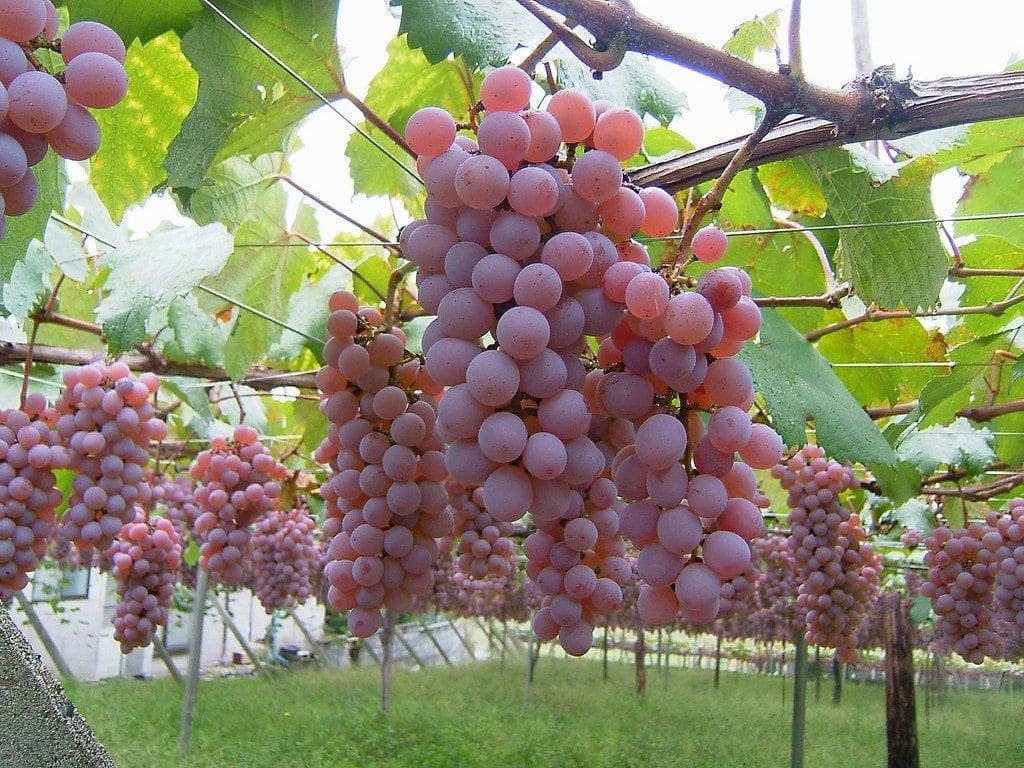
Winegrowing in Japan can be summed up in a single word: Koshu. It accounts for the bulk of the country's wine production. What characterises it and sets it apart is its colour — a bright pink. And when it's grown using the traditional pergola method, it can produce breathtaking views!
Japanese vineyards, despite their calm and zen appearance — as you might well imagine — are actually quite a headache for Japanese winegrowers. The varying seasonal temperatures and the places where they are located demand absolute rigour from the growers. Koshu is mainly grown in Yamanashi, a wine region with vines on the mountain slopes, protected from typhoons by the magnificent Mount Fuji.
Koshu — a little history
Koshu arrived in Japan via the Silk Road around 1,000 years ago, even if its origin remains unclear. Its use for wine only began in the 1870s, as until then it had only been grown for eating.
But what does Koshu taste like?
Of course, a wine can't sell on its pretty pink colour alone. Its main mission is indeed to please our palate. Koshu wines naturally pair with Japanese cuisine — think seafood and light meats, perfect with sushi! Wines made from Koshu tend to have a combination of flavours. From citrus (particularly Japanese yuzu) to yellow fruits, and to compare with well-known European whites, notes of Muscadet, with its freshness and smoothness, but also Albariño, with its lime and peach acidity. Koshu also has something more unique, in the form of a gentle savoury note — as if someone had added a drop of soy to your glass!