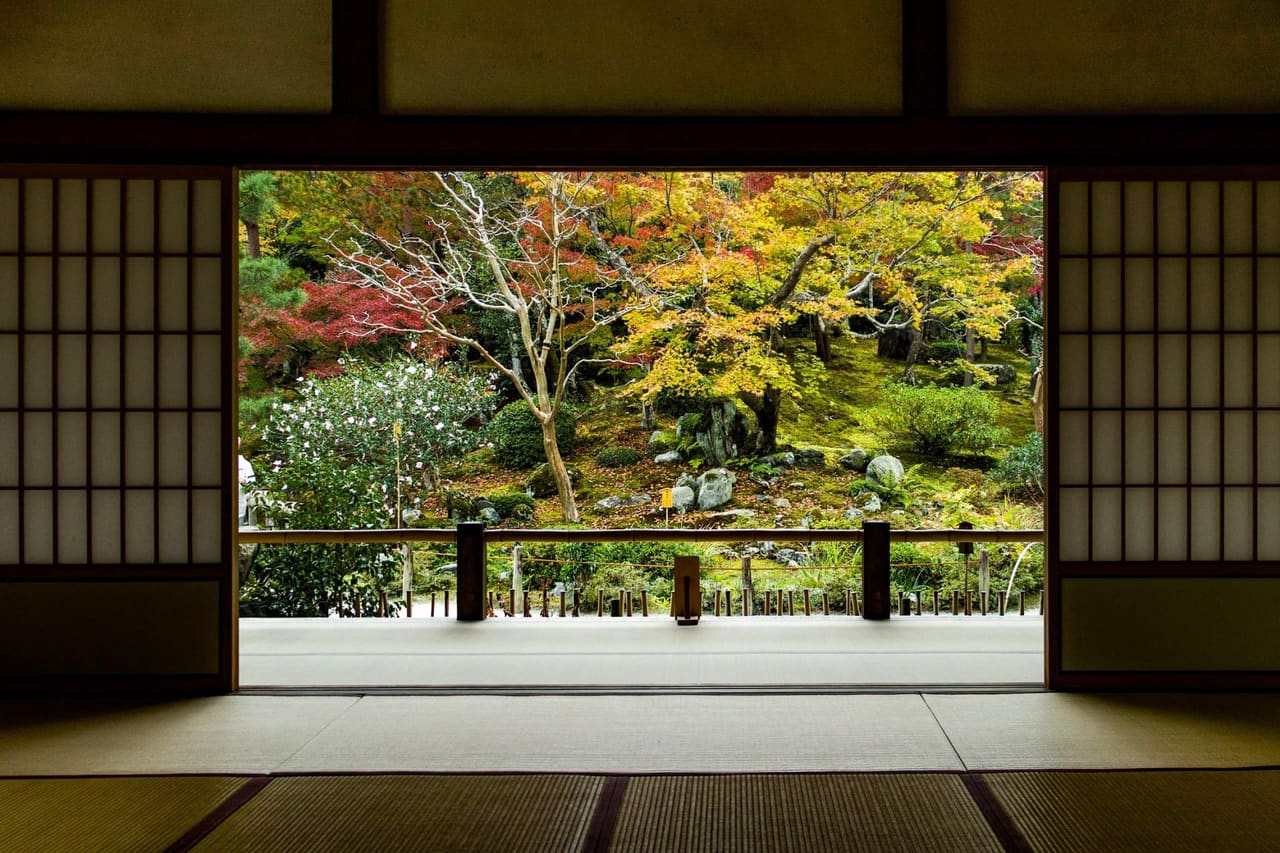
Like everything that emanates from Japanese culture, traditional Japanese houses follow an aesthetic that lies in the detail. Minimalist but very functional, their construction and layout are still real sources of inspiration today, and some ideas might just appeal to you...
Space above all
If we had to keep only one adjective to define traditional Japanese homes, it would be "modular". They are indeed far from fixed and can change according to uses and desires. Not really having doors, a corridor very often goes around the home to serve the entire surface.
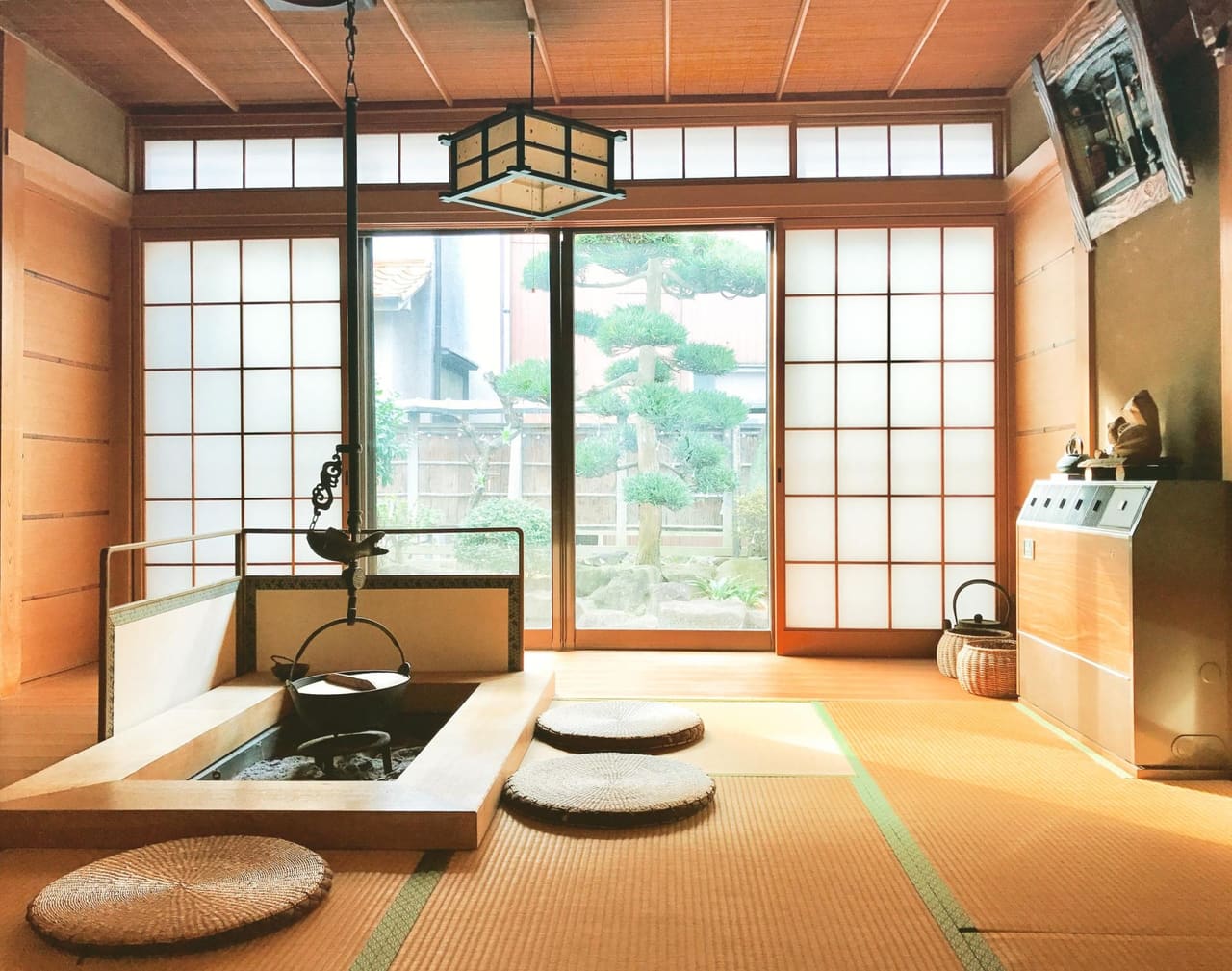
Generally divided into four distinct spaces — one to store food and other provisions, two for family life and a last one to receive guests — these geometric dwellings have elements allowing the spaces to be modulated very easily. These are the removable wooden panels called "shoji", letting subdued light through thanks to their opaque paper sheets. Allowing spaces to be created, enlarged or closed, it's one of the key elements of the design of these homes. Which gives the very essence of the place.
It's also worth pointing out that the "rooms" don't really have furniture and therefore don't have a precise assignment. Light furniture is set up in this or that place according to the use one wishes to give the space. So it's the elements brought in that determine the function of the room, and not the other way around. The vast majority of spaces are neutral and the emptiness is organised according to needs.
Cultivating zen
Light is a very specific element of traditional Japanese houses. Thanks to the opaque paper (called "washi") and the mobility of the wooden panels, everything becomes a play of light. The atmospheres are generally subdued but, like everything else, change according to desires.
Many spaces, and notably the one allotted to night, are covered with tatami. The floor is thus entirely dressed with traditional mats for greater comfort. Of course, let's keep in mind that at each entry into a home, it's customary to take off your shoes, which therefore poses no problem when crossing spaces covered with tatami. The tatami is moreover also used as a tool for measuring surfaces in this case, and replaces our "square metre". One tatami thus equals 190x90 cm.
Finally, greenery also greatly influences the atmosphere of fullness that emanates from these homes. The modular spaces are indeed generally oriented and opened towards the outside or the planted inner gardens. The latter are once again very worked and aim to be true miniature representations of nature.