

No paper that tears, rolls that are too short, bits of tape to find... switch to the furoshiki technique!
This year, take inspiration from the ancestral folding technique from Japan to wrap your Christmas gifts. Practical and eco-friendly, a simple piece of fabric will give your presents an original wrapping. We'll explain everything!
The origins of this practice
The furoshiki technique was apparently born in the 8th century, during the Nara era. At that time, the nobility indeed used fabrics to protect their valuables.
But over the centuries, the practice became more widespread. This same type of fabric pieces was notably used to carry the things needed to go to the public baths. It then took the name koromozutsumi.
This method indeed changed its name over the centuries and according to its uses, but the generic term now remains furoshiki. It's moreover the name given to the piece of fabric itself.
As you'll have understood, furoshiki is a fabric-folding technique for wrapping or carrying items. So it's used in daily life when travelling, like running small errands or carrying your lunch to work. But one of its main functions is now also the wrapping of gifts.
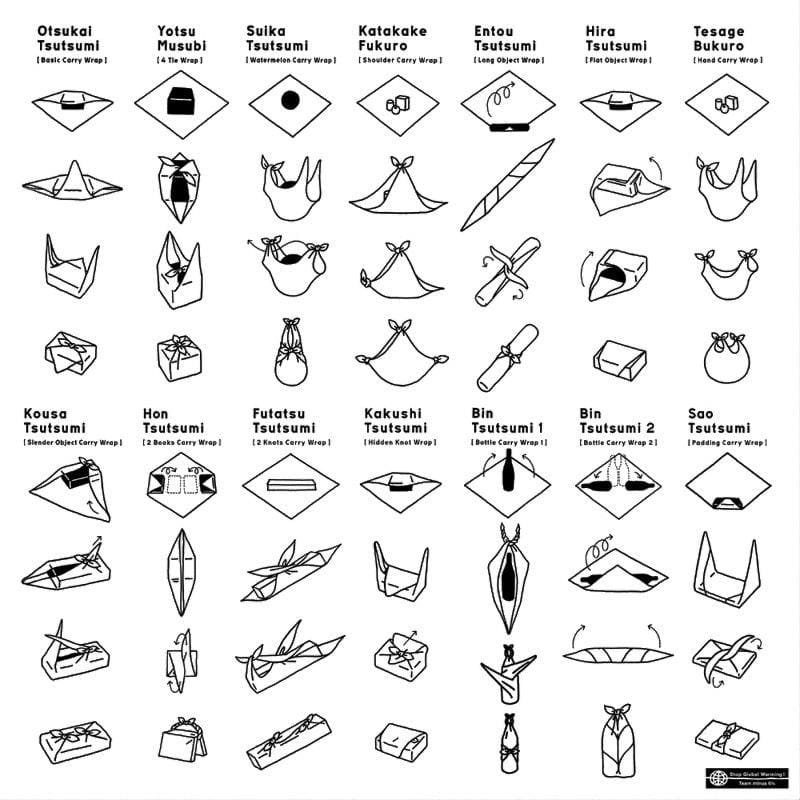
The folds are multiple and evolve according to the items being wrapped. For this, fairly strong and opaque fabric is used (so as not to reveal what it contains), like kimono offcuts at the time. You then decide to tie it decoratively or to create a practical handle to carry it. Each type of fold has a specific name.
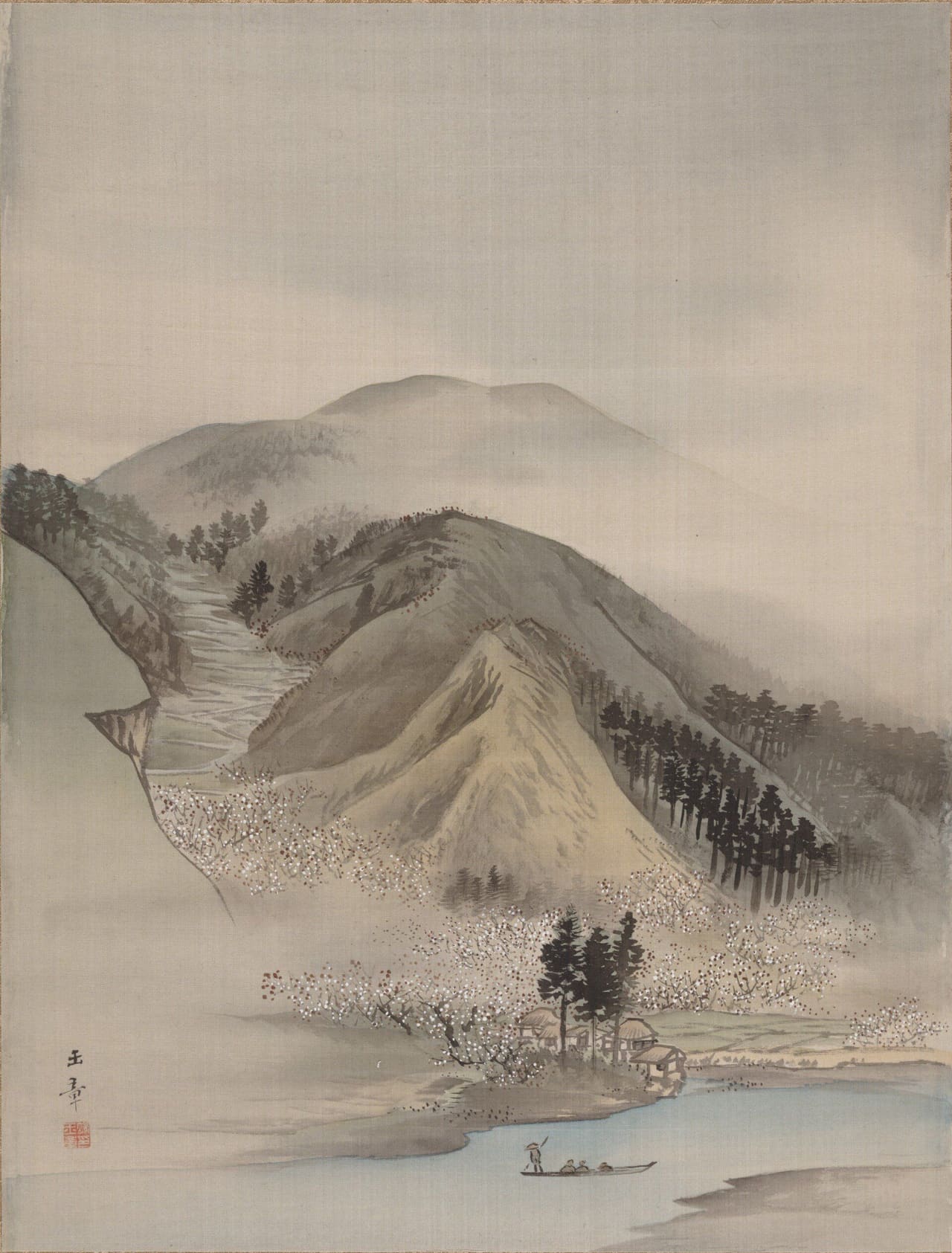
The Japanese, having an eye for detail and good intentions, used specific patterns for the fabrics. These varied according to the occasion, the season or the person in particular. For example, the cherry blossom (sakura) is used in spring; the maple leaf (momiji) in autumn; the rabbit (usagi) to bring luck; or the shell (kai-awase), a symbol of fidelity used at weddings. The most recurring themes are obviously fauna and flora, as well as the paintings of the Japanese artistic movement Nihonga.
A technique more relevant than ever
For several decades, the practice of furoshiki was abandoned. As in most of the world, Japan saw the arrival of the plastic bag as a revolutionary way of carrying purchases and belongings. However, after years of use and with a more than disastrous ecological record (only a few minutes of use for several hundred years of dissolution), the plastic bag is now, fortunately, shunned.
So we see fabric folding reappearing as an eco-responsible alternative, thanks to its reusable aspect. The Japanese Ministry of the Environment has been recommending its use again for several years now.
The fabrics have moreover become quite modernised and have somewhat lost their meaning. The colours and patterns have evolved and are more graphic and colourful. Many sites offer furoshiki of all sizes, but the square format remains the simplest to use and the most adaptable to the different objects to be wrapped.
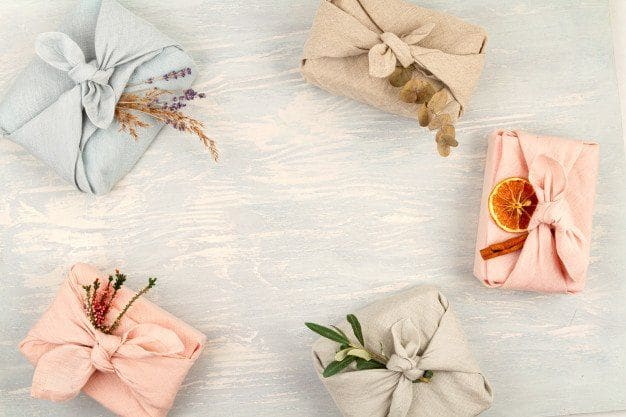
If you want to embark on the furoshiki experience for your next gifts, it's within everyone's reach. And instead of buying special fabrics, sometimes expensive, you probably have what you need to make some in your cupboards. Fabric offcuts, old scarves, sheets, pretty tea towels... don't hesitate to reuse them this way — it'll be an excellent alternative and will contribute to the principle of upcycling. The key is to use a fabric that's strong enough, but not too rigid, so you can handle and tie it easily.
No more tape, staples, curling ribbon and other decorative ribbons or fasteners — the fabric is enough on its own. By using the tying methods shown above, you make sure you can carry, protect and wrap your products without needing to spend large sums on supplies.
But if I use the furoshiki method to give a gift, what about the fabric afterwards? There are two schools of thought here, which don't actually oppose each other, because they have the same goal: reuse! Either you take back your fabric square to find a new function for it later, or you offer it with the present. Indeed, it can be a gift within the gift that may perhaps introduce new people to this technique. Like passing on the baton.
So, all wrapped up?


