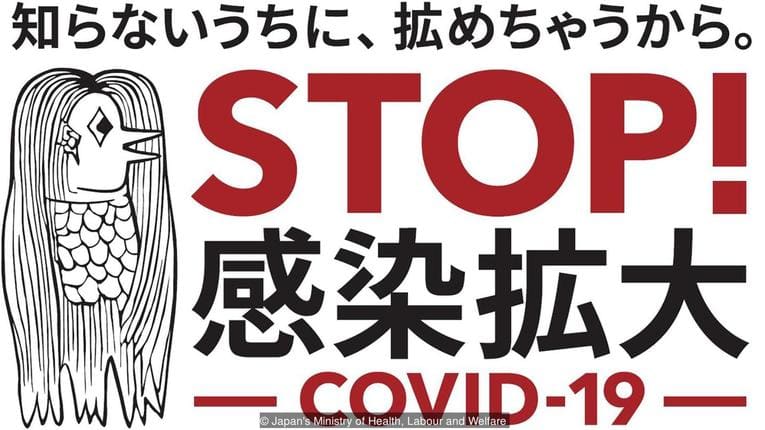
Since the Covid-19 crisis, a strange character from old Japanese beliefs is resurfacing. So, no, it hasn't concretely reappeared. But given the protective virtues attributed to it, the amabié has, for some months now, been back at the centre of attention.
Ama... what?
Amabié! The amabié is one of the many yōkai venerated by the Japanese. These deities mostly come from the polytheistic Shinto religion and aim to represent an element or a concept towards which certain prayers are directed. Among the best known, for example: Izanagi, god of creation; Uzume, the goddess of mirth; or Inari, the deity of rice.
But the true origin of the amabié belongs more to a popular legend dating from 1846. That year, in the province of Kumamoto, glows were seen on the water's surface every evening. To investigate, an officer was dispatched to the scene and saw a strange creature, almost a mermaid, emerge from the sea. Standing on 3 fin-shaped legs, it has long hair, a big mouth resembling a bird's beak and scales all over its body. A character between fish, bird and human.
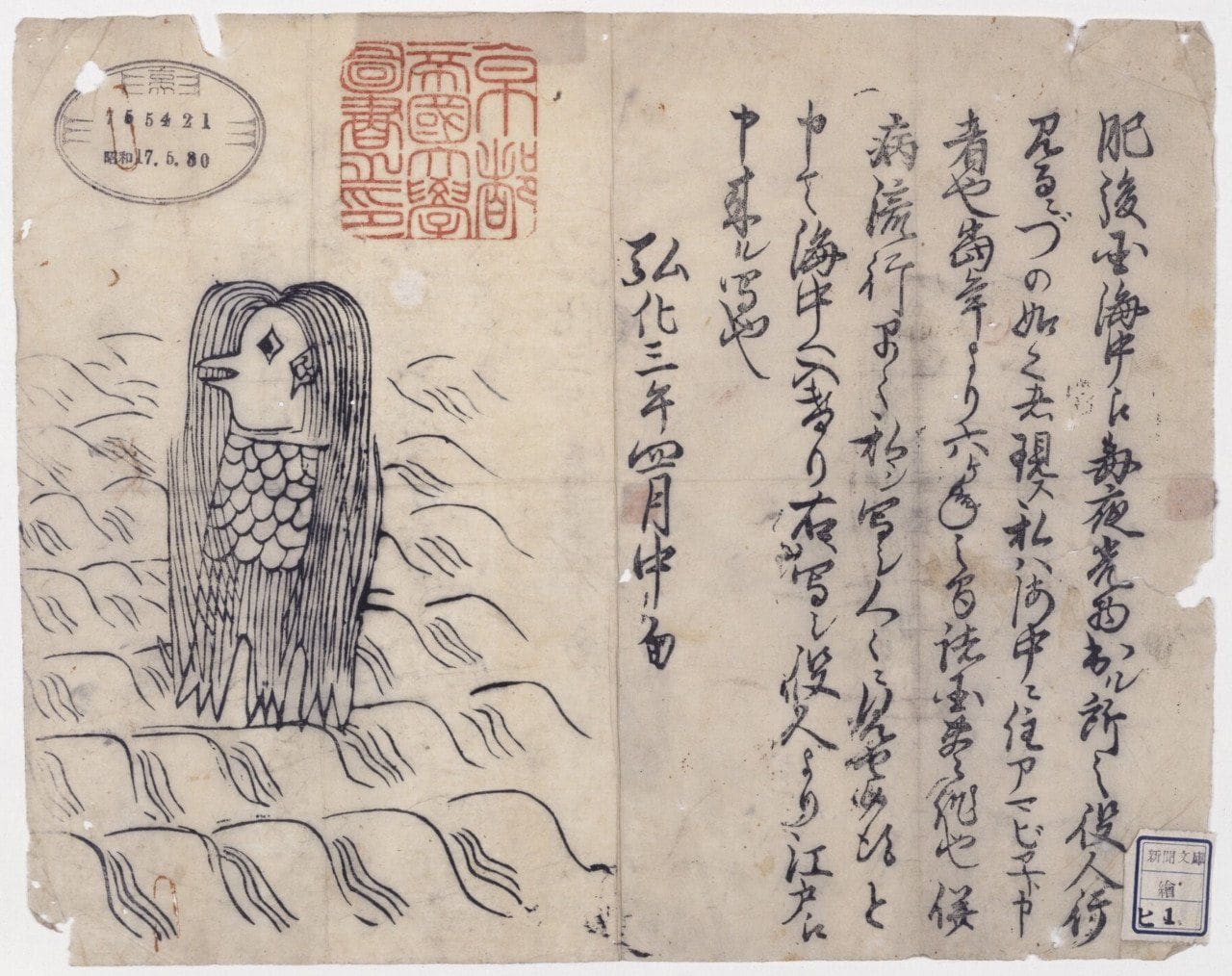
Although it seems to come straight from the depths, the reason it addresses this Japanese officer is to deliver a message, or more exactly a prophecy. It indeed predicts 6 fruitful years with abundant harvests... before the possible arrival of an epidemic. If that's the case, to counter this evil and protect the populations, it suggested drawing its portrait to spread it to as many people as possible.
A hope against Covid-19?
Although this legend is part of a long list of popular stories much appreciated by the Japanese, the global situation in this year 2020 has naturally brought the myth back to the surface.
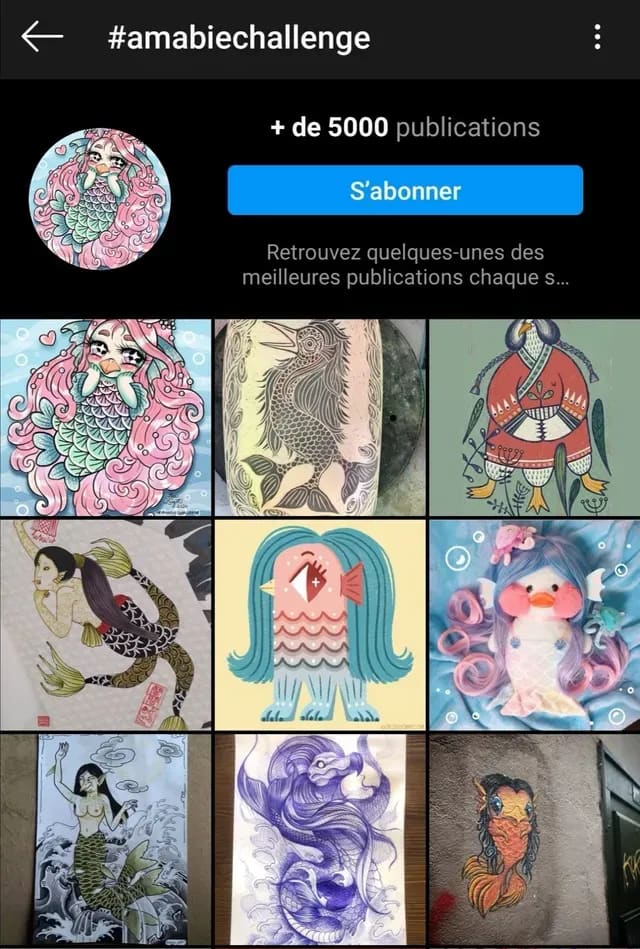
Since the start of the health crisis, social media has been buzzing about the amabié. Kyoto University Library indeed shared, as early as March, a photo of the creature, and it was very widely relayed. Hashtags such as #amabiechallenge also appeared, where artists appropriate the image of the yōkai and interpret it in their own way.
But internet users aren't the only ones placing a slim hope in the amabié's protection against the coronavirus. It's now found in the form of figurines, as good-luck charms, and Japanese media such as the weekly The Japan News have notably made it their covers.
More surprising still, the Ministry of Health doesn't hesitate to use the creature as a mascot on the official posters dealing with the current virus.
After all, the principle is to spread its image as much as possible to be protected. Let's hope the magic works soon.