Don't be fooled by its cute look and harmless air — fugu, also called "pufferfish" or "balloon fish", could well kill you. No, it's not the spines present on certain species that represent a danger to humans, but rather eating it.
The authorities try to regulate its consumption as best they can, but despite the risks, fugu has become a highly prized dish again.
A fish that imposes itself
Present in all types of water and notably in those of the Pacific, fugu is well established in Japan, since no fewer than 7 different genera and more than fifty species are recorded. Belonging to the takifugu fish (a family of venomous fish), it's famous for the appearance its body takes when it feels threatened.
Indeed, in case of danger, fugu's main defence mechanism is to swallow water until it swells and becomes round. It's from this particularity that it owes its nicknames "globe" or "balloon". But fugu is also one of the great artists populating our oceans, since it's partly responsible for the drawings on the sand. By rubbing on the bottom, it creates perfect geometric shapes, like mandalas.
While 80% of its fishing comes from its natural environment surrounding Japan, it's increasingly present in the other seas and oceans of the globe. With global warming, it's now found notably in the eastern Mediterranean.
Not so harmless
Fugu is subject to very particular monitoring by the authorities, and notably the Japanese Ministry of Health. The reason? This fish with delicate, rather sweet flesh can be fatal to humans if it's not properly prepared before consumption.
Fugu's second defence mechanism is indeed the secretion of a poison, tetrodotoxin. While the latter is particularly present in the animal's liver, it's also found on its skin and gonads.
This neurotoxin attacks, as its name suggests, the nervous system, and can then cause paralysis and respiratory distress leading to death. Only 4 hours would be enough for this poison to cause the death of the person who consumed those parts.
An exceptional dish
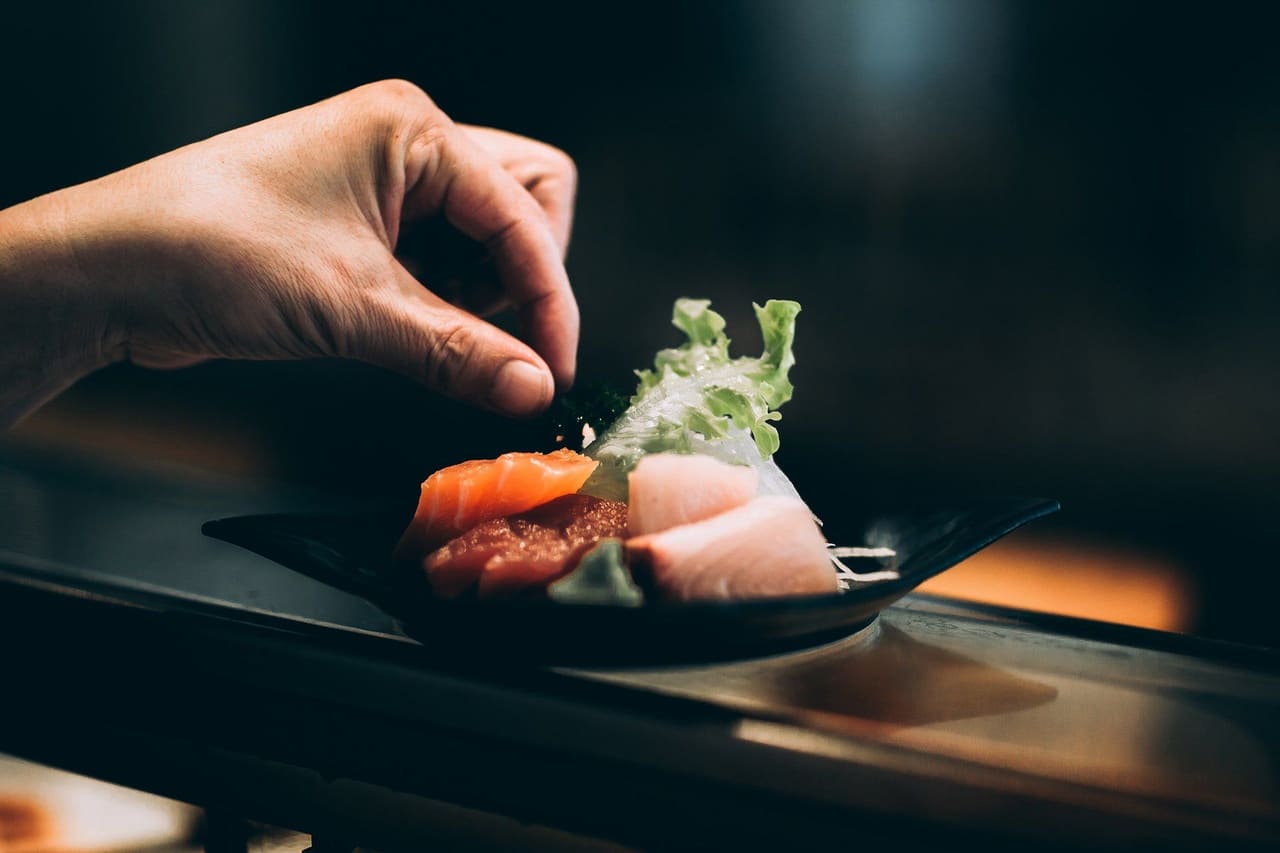
Banned for several years in the country, the fish is nonetheless now resurfacing on the tables of great restaurants. And for good reason: despite the risks linked to eating it, many gourmets flock to try the experience. And since what's rare (and dangerous) is expensive, they don't hesitate to spend considerable sums to enjoy it raw or cooked.
Not every chef is allowed to serve fugu. For obvious safety reasons, the preparation techniques are passed on by specialists. A licence to cook the fish must be granted following cutting tests. Only half the candidates generally obtain it. The cutting is so particular that a specific knife is used, the fugu hiki.
It's moreover strongly advised not to prepare it yourself, even if it comes from your own catch. Every year, fugu is still responsible for several poisonings, sometimes fatal.