Although we're currently in the middle of the back-to-school period in France, it's nothing of the sort in Japan, since the school year starts in April and ends in March of the following year.
Between a culture of success, activities and traditions, the Japanese education system is very far from the models we know.
The curriculum
Just like in France, school is compulsory in Japan. So, children from 6 to 15 years old must be enrolled in a school during this period. It's split into two phases: primary education (小学校 Shōgakkō) from 6 to 12 years old, then middle school (中学校 chūgakkō) from 12 to 15 years old generally.
The child can, however, start school earlier, since kindergarten classes are also set up until they're 6 (幼稚園 Yōchien). After 15, the student can continue with what resembles high school (高等学校 kōtōgakkō) for 3 years. No streams to start determining one's professional career — the classes are the same for all students. The choice of orientation will be made only at university entry.
The university system, for its part, is quite similar to the one we know. Young Japanese can earn a bachelor's, a master's or even a doctorate if they continue their studies.
The organisation
As we said, a school year runs from April to March in Japan. And Japanese students are a little braver than French students, because they only have 10 weeks of holidays in the year. These are spread throughout the year, which itself uses the term-based principle, since it's split into 3 main periods.
A school week can prove very busy, since although classes are generally given from Monday to Friday, to this is added a good number of after-school study groups and extra-curricular activities. Even if they're not necessarily compulsory, they represent assets for continuing studies, and schools encourage students to take part in them.
The traditions that remain
The uniform
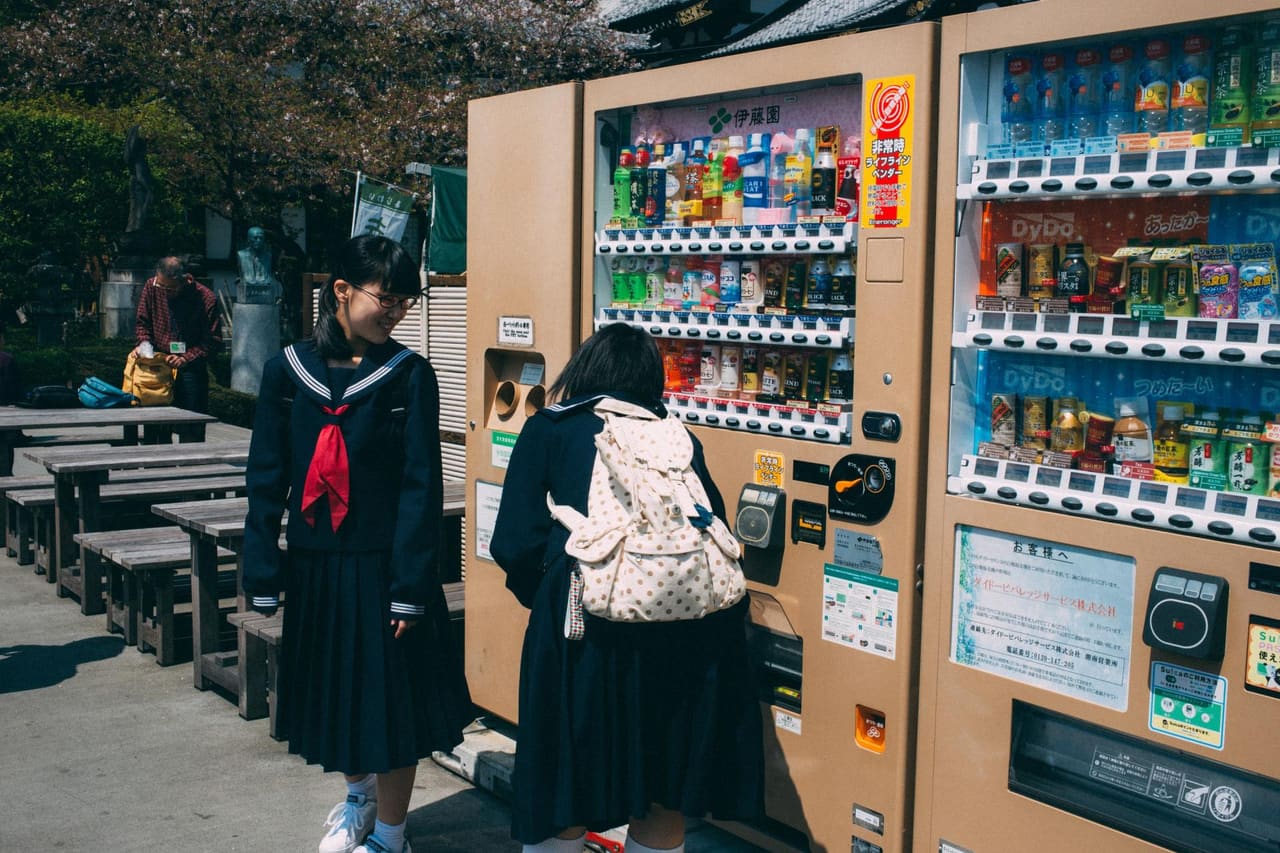
Although school is free, parents face a considerable and compulsory expense for their children: the uniform. It's not compulsory in all establishments, but remains the norm in most. Girls and boys thus don this outfit, making them similar to the others, thereby avoiding all kinds of teasing about clothing appearance. It's generally made up of a tailored jacket, matched with a skirt or trousers, and can be accessorised with a coloured tie or bow. A summer version and a winter version exist, also displaying the crest and other distinctions of each school.
The culture of elitism
The Japanese are known for their rigour and discipline. These character traits are instilled in them from the youngest age, and school guides them on this path. Many establishments practise selection based on students' level. This is notably the case at university entry, which are mostly very elitist — but not only... There would also be entrance tests for certain kindergartens. The questions are obviously adapted to the children's age and would mainly attest to their development and logical sense. It's in this search for the best that students enrol in many evening classes in very varied fields, which can bring them complementary knowledge and open the doors of great schools and companies for them.