

You may use it to spice up your favourite Japanese dishes, but do you know exactly what wasabi is?
You probably eat it the wrong way, by the way. Mixing it with soy sauce would be seen as insulting in the Land of the Rising Sun!
What is wasabi?
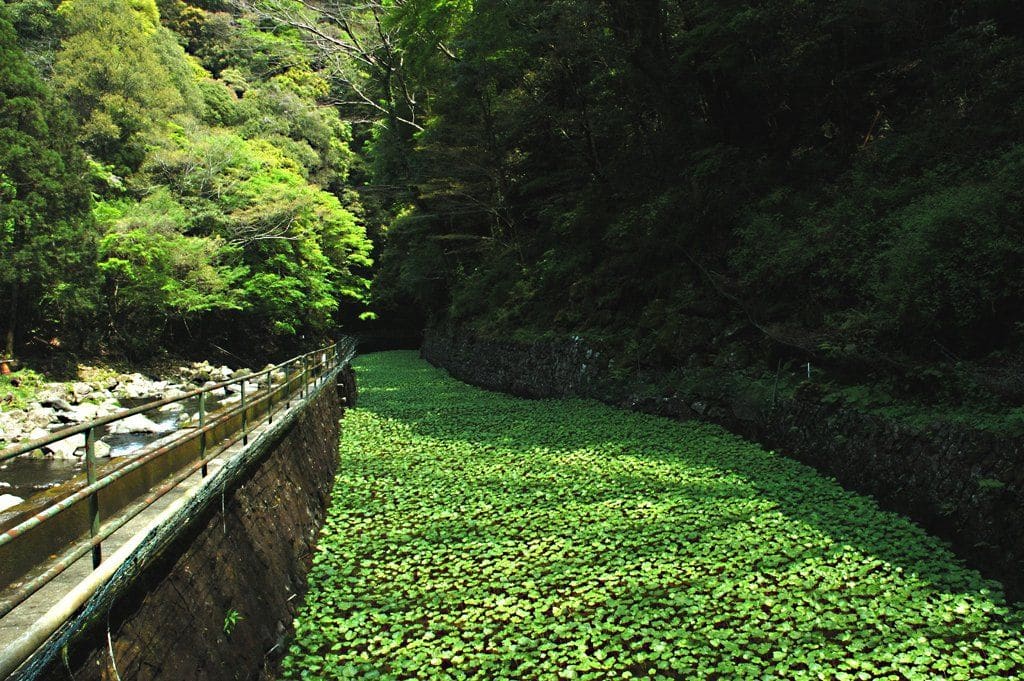
While we use the term wasabi to refer to this paste used as a condiment that we all know, it's also the name of the plant it's made from! Because yes, wasabi is above all a plant found in Asia and said to originate from Japan.
This species grows in cold water, in the mountains, but can be cultivated in artificial water beds. Legend has it that plants from the slopes of Mount Fuji give the best flavours.
Just like mustard or horseradish, whose tastes are similar (in their intensity in particular), wasabi belongs to the Brassicaceae family. Once used as a medicinal herb for its antibacterial properties, wasabi is today an integral part of Japanese and Asian cuisine without having lost its merits:
- it's also an antioxidant
- it's a source of calcium
- it contains protein
- it contains vitamin C
- it's an excellent decongestant (notably for the nose, with its spicy taste)
- it's recognised as anti-cariogenic (wasabi's effect on enamel prevents the development of bacteria)
How to eat it?
In the end, the whole plant can be eaten. But do you know which part the "wasabi" condiment is made with? It's with the roots and stems. To do this, you take these pieces and grate them in a circular motion on a so-called "sharkskin" grater.
This grinding causes an enzymatic reaction that gives wasabi its flavour and its very particular intensity. But be careful — the extracted paste only keeps this taste for about ten minutes. And that's when you wonder how you can eat wasabi in a tube, in a sachet, etc.
The wasabi found in France, and outside Asia more generally, doesn't really come from the plant of the same name. Its preservation being very complex, it would be too expensive and difficult to export it around the world. What we find in Japanese restaurants or in supermarkets, for example, is none other than a derivative, mainly made of horseradish. Note also that freshly grated wasabi is rather brown with greenish tendencies, and not green as we know it.
Finding "real" wasabi is therefore difficult but not impossible. Several European companies have taken on the challenge of producing it and preserving all its flavour for longer. These products can be found notably in a few fine-grocery stores. You can also try your luck by going to Asian supermarkets, which may offer frozen wasabi roots. It's then up to you to prepare it.
And no waste: if you have a complete plant, use the leaves in a wok or in a salad. Feeling more indulgent? Fry them to get tempura fritters.

Wasabi is now the king of aperitifs, since spicy crisps or coated peanuts are a big hit. It also remains the ideal condiment to enhance the raw dishes of Japanese cuisine. Not forgetting the pieces of ginger and the soy sauce.
But don't hesitate to use it for cooked dishes, and notably meats. Just like mustard, it can also be used as a base for an original vinaigrette that will add some spice to your salads.
Finally, for the more adventurous, know that the Japanese also use wasabi to flavour sweet preparations. A whipped cream, an ice cream, cakes, shortbread... don't hesitate to try and tell us what you think.


