While in France in particular we celebrate our departed on All Saints' Day, it's not the same for Japan. But very attached to the veneration of ancestors, the Japanese devote 3 days of festivities in their honour: O-Bon.
While Halloween is festive in Western countries, it's nothing compared to the celebrations during O-Bon — see for yourself!
Centuries of tradition
This festival in honour of the dead originates from China, but was adapted in Japan more than 500 years ago. "Adapted", because the Japanese added their folklore to this festival — called the "Ghost Festival" in China — by adding celebrations similar to those of the New Year, for example. It's even said that during O-Bon, ghosts are allowed to return to Earth.
We find the genesis of this event in the Buddhist religion. The story goes that a disciple of Buddha, Mokuren, had a vision of his deceased mother in the Realm of Hungry Ghosts (where neurotic spirits are sent). To relieve her and get her out of this place, Mokuren asked Buddha what to do, and the latter advised him to organise a celebration for his ancestors. The offerings and celebrations made it possible to free his mother and also allowed him to realise the sacrifices she made during her life. Since that day, the dead are celebrated to thank them for their devotion during their time on Earth.
The religious aspect is much less present now, but O-Bon remains a festival cherished by the Japanese. The 3 days of festivities are (surprisingly) not public holidays, but most inhabitants take holidays at that time of year to join their family and spend this period of reflection together.
In Japan, death isn't an end in itself but rather a renewal for the soul. It's because of this perception that the departed are offered many offerings, notably during funeral rites and during O-Bon.
O-Bon doesn't take place at exactly the same periods depending on the region of the peninsula. Initially around the 15th day of the 7th month of the year (the day indicated to Mokuren by Buddha), it was shifted following calendar changes. So you can attend these celebrations generally between mid-July and mid-August, depending on the locality.
A series of rituals
Mukaebi: At the start of the festivities, the Japanese set up and light lanterns in front of their houses. These can be made and decorated for the occasion, and so very original and personal. They're meant to guide the spirits and help them return home.
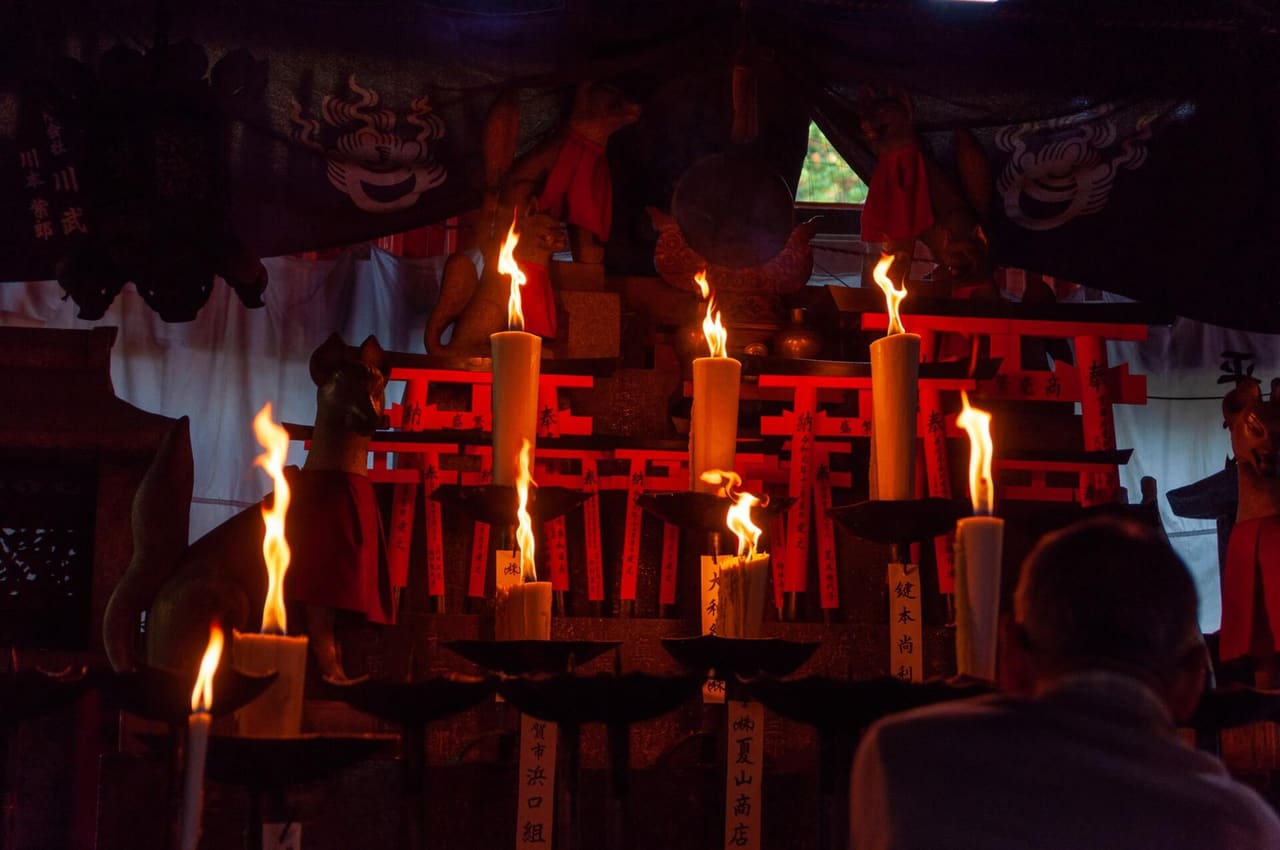
Shōryō-dana: Each family generally builds one or more altars to gather at home. There are normally at least two. A first for the departed and family ancestors, and a second for all the spirits in search of peace. Flowers, candles, offerings... these altars are generously adorned.
Ohakamairi: Just like for All Saints' Day among Christians, each family takes advantage of this period to maintain, clean and decorate the family graves.
Bon odori: It's one of the most festive customs. Bon odori is a dance associated with this festival and performed during the 3 days to express gratitude towards the departed. The music and choreography are different depending on the region, once again, but the dance steps generally remain simple so that everyone can take part in the dance and join the costumed and made-up dancers. This dance is now also performed to celebrate the arrival of summer.
Hatsu bon: One is said to celebrate hatsu bon when a loved one has died in the preceding year. Additional rites are added to the usual celebrations.
Tōrō nagashi: Finally, to close the festivities, the Japanese place lanterns with a lit candle inside on certain waterways. So you can admire a "wave" of light descending the rivers or heading out to sea, in order to escort the spirits back and guide them to the other world.