

There are places we may not yet have visited and which are nonetheless anchored in everyone's mind. Mount Fuji is undoubtedly one of them. Japan's highest point, this atypical mountain offers us far more than the beauty of its landscape.
A UNESCO World Heritage Site since 22 June 2013 (it's the country's 17th site), Mount Fuji is a sacred site for the Japanese, who celebrate it on Mountain Day on 10 August (a public holiday) and on Mount Fuji Day on 23 February.
A mountain, but not only...
With its peak at exactly 3,776 metres above sea level, Mount Fuji is the highest summit of the Japanese archipelago. But even if it's commonly considered a "mountain", a piece of information is missing.
Mount Fuji is actually a stratovolcano, meaning it's composed of the debris, lava and flows of previous volcanic eruptions. Located not far from three tectonic plates, its formation is said to date back 600,000 years, at the first eruption. Many others followed, including two larger ones that would form the upper layers of the mound to become its current version 10,000 years ago.
Current version, but perhaps not definitive, because Mount Fuji is moreover still considered active! Indeed, its last eruption was "only" 3 centuries ago, in 1707, following the most violent earthquake Japan has ever known. A volcano is considered totally extinct if its last activity dates back more than 10,000 years. The 1707 eruption wasn't the most impressive in terms of explosivity, but it remains memorable for the ash and stone fallout it generated.
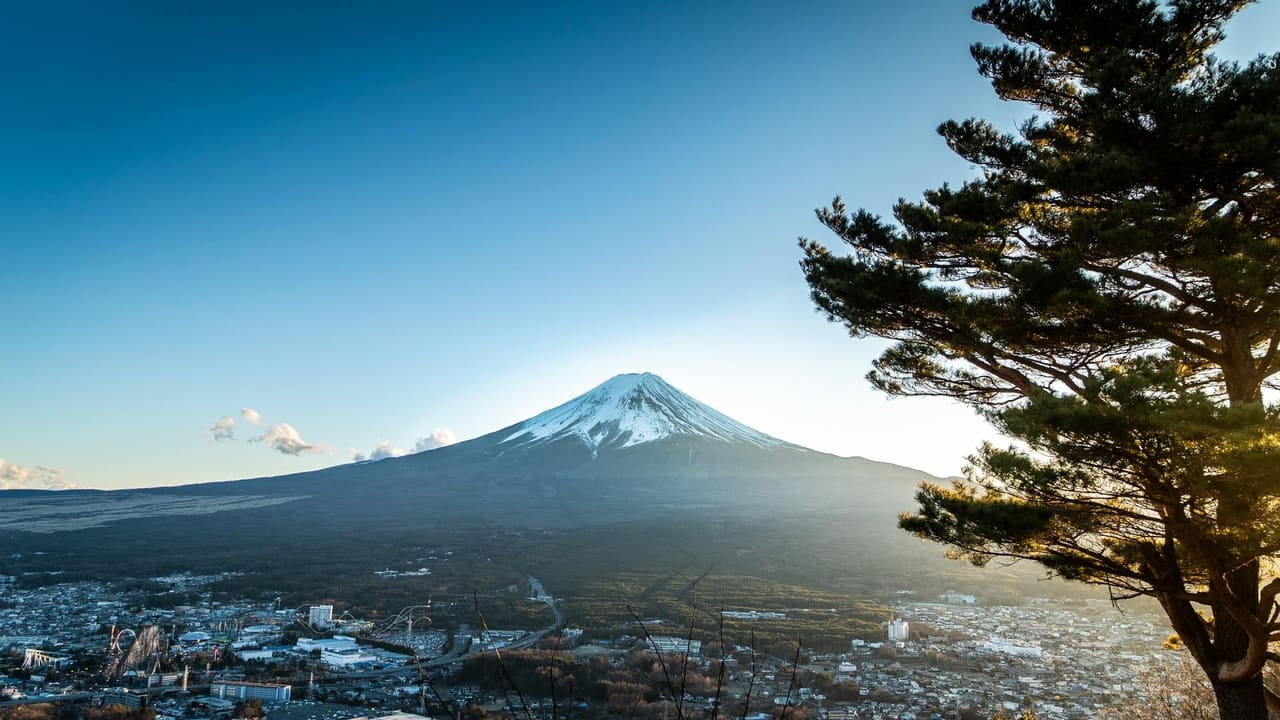
Today this cone, 30 km at its base, blends into the landscape of Honshū island and is surrounded by 5 lakes, the Fujigoko. In clear weather, it's even possible to see it from the Japanese capital, Tokyo, which is about a hundred kilometres to the south-west.
A mountain that draws the crowds
Because of its height, Mount Fuji has always been associated with a place linking Earth and the beyond for believers. So many religions devote a cult to it, notably among Shintoists and Buddhists. The legends around the mountain are numerous in the various beliefs, and steles and shrines dedicated to the deities are set up there. As a result, the pilgrimages are numerous during the period when its ascent is allowed.
Indeed, between July and September, many pilgrims and tourists set out to conquer Mount Fuji. The first known expedition to its summit dates back to 663. The ascent being quite simple for beginners, nearly 400,000 of them climb it each year. Many rest stops are set up all along the 4 paths leading to the highest point, called Shin-Fuji. The visitors' second objective is also to walk around the crater (about 700 m in circumference). Allow between 6 and 8 hours to go up and between 4 and 6 hours to come down.
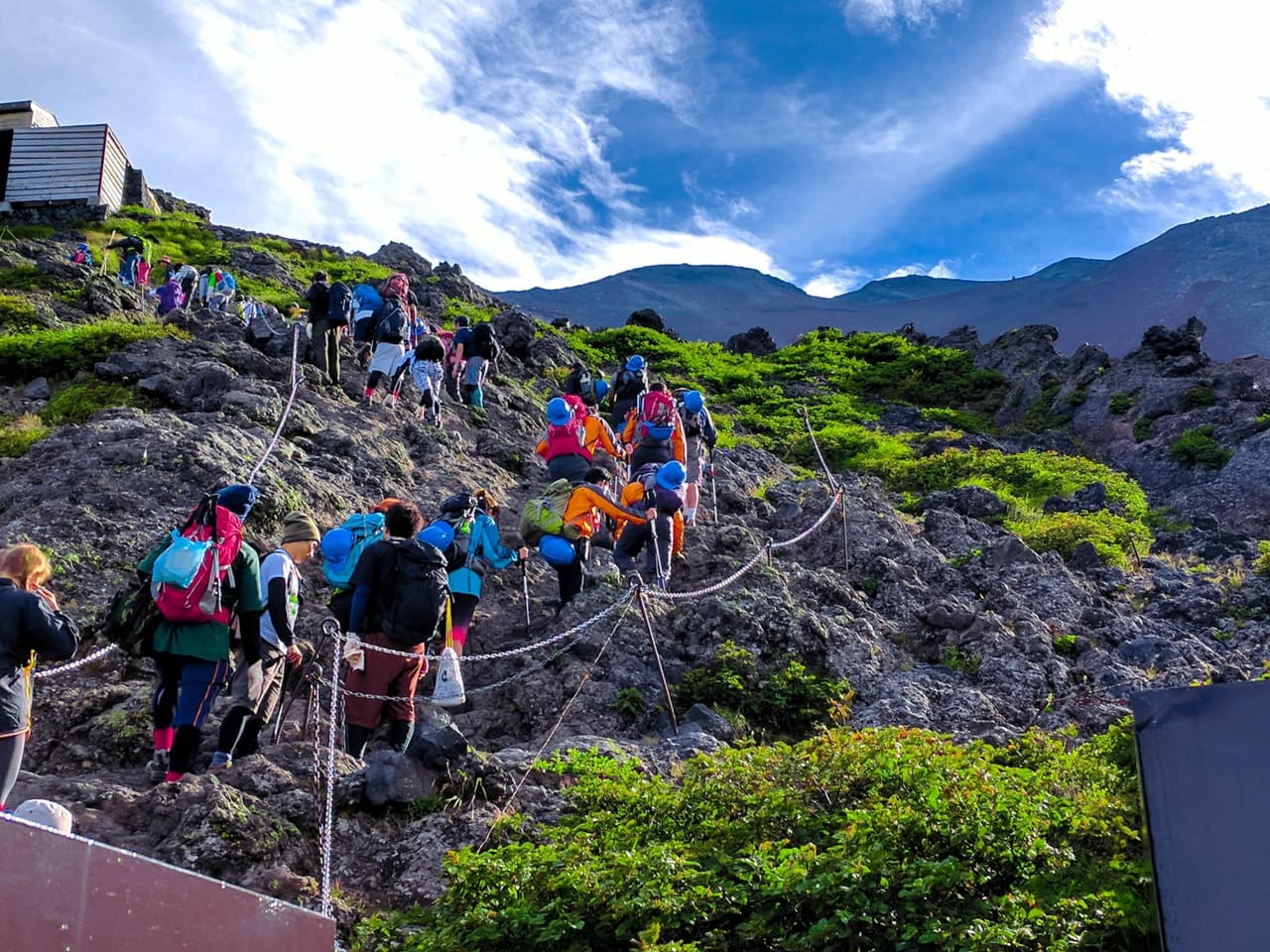
The ascent is only allowed in summer because, with the altitude, the conditions and temperatures are risk factors. In summer, temperatures are generally around 6 degrees, but a record of -18 has already been recorded. So imagine in winter, when snow and ice have covered the highest slopes. A weather station was moreover built there at altitude.


