

We often hear about it when Japan is mentioned — the tea ceremony is known to all. But what does it consist of exactly? Ceremony or pastime?
Let's dive into the heart of Japan and its traditions and discover together the meticulous tea ceremony.
The tea ceremony - The traditional Japanese art
Imported from China in the 12th century, powdered green tea, better known as matcha, is one of the Japanese's favourite drinks. Adopted by Buddhist monks then by samurai warriors, it's enjoyed pure during Sado, the traditional tea ceremony.
Its origins
Murata Shuko (1422–1503) was the first to put forward the idea that the preparation and tasting of tea could be practised as a meditation exercise of Zen Buddhist philosophy.
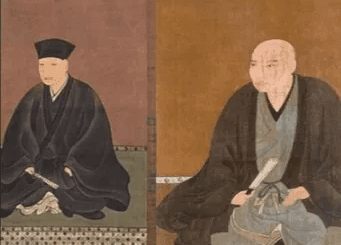
But it was the tea master Sen no Rikyū (1522–1591) who imposed the wabi style on the tea ceremony: sober and calm refinement, still found in the tea ceremony today. Based on the principle that each meeting is a unique event that can never be reproduced identically, the tea ceremony must celebrate the beauty of nature, respect between participants and simplicity.
For this same reason, the chanoyu is an intimate gathering, where there are never more than five guests in all.
The Japanese tea ceremony comprises four great principles summed up in the expression 和敬清寂 wakeiseijaku:
和 wa: Harmony
敬 kei: Respect
清 sei: Purity
寂 jaku: Tranquillity
Nowadays, it's still this philosophy that is taught in the schools. The ceremony master must also have received training in the traditional artistic fields of ikebana, calligraphy, kimono, ceramics and incense. It's considered that the teaching, then the practice, last a whole lifetime, and that one always remains the disciple of one's sensei (teacher).
Until the end of the 19th century, the tea ceremony was exclusively practised by men; the samurai took advantage of it to exchange and plot, sheltered from battles and prying eyes. When these warriors declined (during the Meiji era (1868-1912)), women took up the torch and thus maintained the tradition during the Second World War. Even today, women perform the tea ceremony more often than men.
How it unfolds
Curious to know how it goes? ;)
Here is a description of the best-known tea ceremony, with the tasting of a light matcha tea:
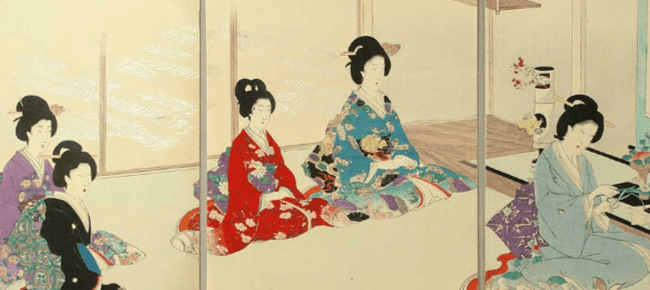
1. Purification - The tea master, dressed in traditional clothes, begins by greeting his guests, then places the various utensils in their defined position. The silk square fukusa is used to clean the natsume box and the chashaku scoop. Then, the host washes the chawan bowl by whisking the hot water poured with the chasen. It's at this moment that he checks the good condition of the bamboo whisk. The water is then thrown away and the bowl dried using the chakin cloth.
2. Preparation - The master places two scoops of matcha powder in the bowl, which corresponds to about two grams. He adds the water and beats the preparation with the chasen. The movement begins with a slight rotation in order to unify the brew. Then, you should make a firm, rapid back-and-forth motion from top to bottom. The drink then has a smooth, slightly frothy texture. Placed to the right of the bowl, the chasen must still contain tea foam to signify the right consistency of the preparation.
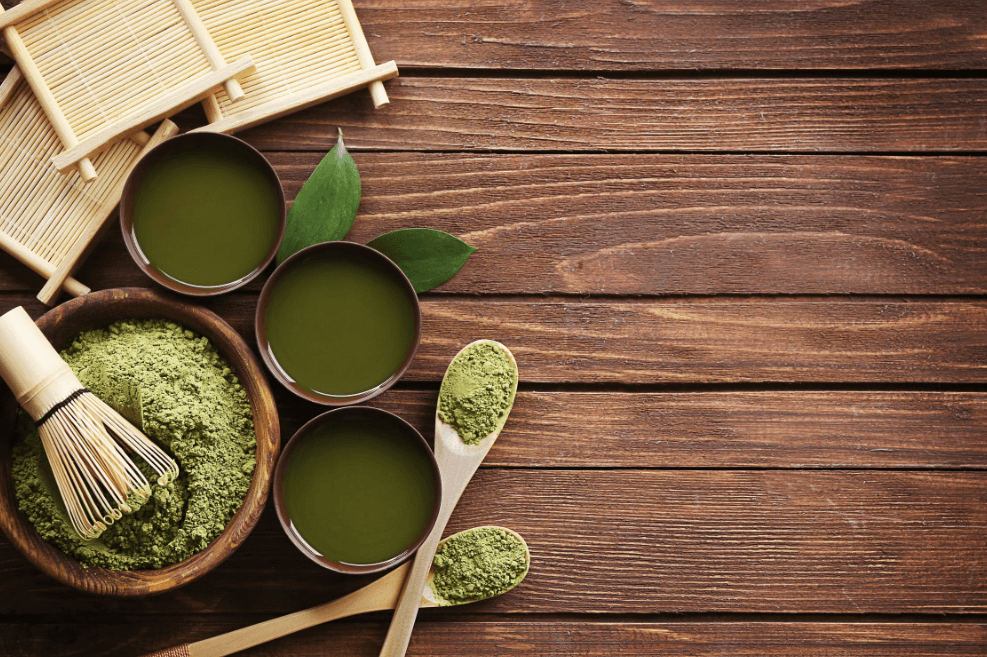
3. Tasting - Thus ready, the tea can be served to the guest of honour, to whom the bowl is presented turned towards the front face. Before tasting, the latter must greet the second guest. Then, he raises his bowl as a sign of respect for the host and turns it twice clockwise, in order to position the front face of the bowl opposite his mouth. Drinking from the front face is an unforgivable mistake. Matcha tea is drunk in two and a half sips, drawing in the last mouthful well, in order to make the master understand that the tasting is over. Finally, the guest repositions the bowl with the front face towards him and sets it down gently.
4. Thanks - The host thanks the first served and takes back the vessel; the preparation for the second participant can then begin. Once all the guests have drunk their tea, the master proceeds to the meticulous cleaning of all the utensils, and presents them one by one so that everyone can admire their quality and beauty.
And because images are worth more than a thousand words, here is a video of the tea ceremony:
Did this article take you on a journey? Don't hesitate to share it! :)


