

Vinegared rice and a sheet of nori enclosing fresh, finely cut ingredients — we all know the maki! It's moreover one of the most popular recipes in Japanese restaurants, a snack or dish that's easy to eat and tasty.
But don't be fooled by its appearance — its origin might just surprise you! Now having travelled the world, it's also a dish that keeps reinventing itself. Here's everything there is to know about the maki.
From criminals to the Californian coast
Even if we don't know exactly the origin of this classic of Japanese cuisine, the maki was apparently indeed invented for a group better known for its crimes than for its culinary skills: the yakuza.
At the start of the 20th century, the famous sushi was reportedly presented in roll form to let the criminal gangs eat it more easily. It was also wrapped in a sheet of nori so the yakuza could keep playing cards without the rice sticking to their fingers. Clever!
"Maki" is moreover just a contraction of the original name, makizushi, meaning "rolled sushi", also sometimes called makimono, literally "rolled thing".
And it's true that this practical little side, not necessarily requiring chopsticks, quickly won people over. We even saw the first maki arrive in the United States as early as the start of the 1970s, notably in California, where it experienced one of its most popular adaptations...

The maki in all its forms
The maki, being itself a derivative of sushi, hasn't for all that escaped adaptations and recipe modifications over time and travels.
We were just talking above about its Californian variation, which is now an integral part of every Japanese restaurant menu: the California Roll, also called ura maki. The peculiarity of this recipe is that the nori sheet is kept in the middle, under a layer of rice. Which wouldn't have pleased the yakuza, you're right!
More surprising and surely rarer, the maki in cone form: the temaki. Nothing differs between the two recipes in terms of ingredients; here it's the appearance that comes into play and brings all the originality of this adaptation. If you're not too keen on the seaweed sheet, we advise against this type of maki since it's more present, rolled conically to fill it with rice and other accompaniments.
And do you know the maki in its Korean version? It's the gimbap. This speciality is actually different in its making, but its seaweed-roll shape inevitably recalls the Japanese version. Here, the rice isn't vinegared but prepared with sesame oil, and the fillings are often more highly seasoned, notably thanks to kimchi (spicy vegetables).
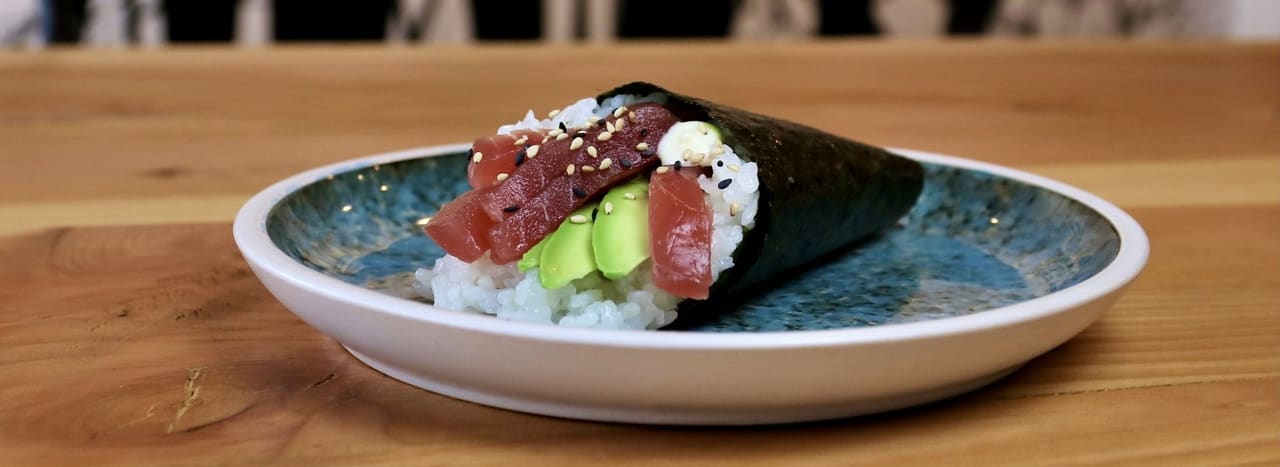
To each specificity, its own little name
If you're a regular reader of our blog, you'll have noticed over the articles that the Japanese love precision and naming things clearly. The same is obviously true for each culinary speciality, whose specificities enrich the dictionary and our vocabulary bank.
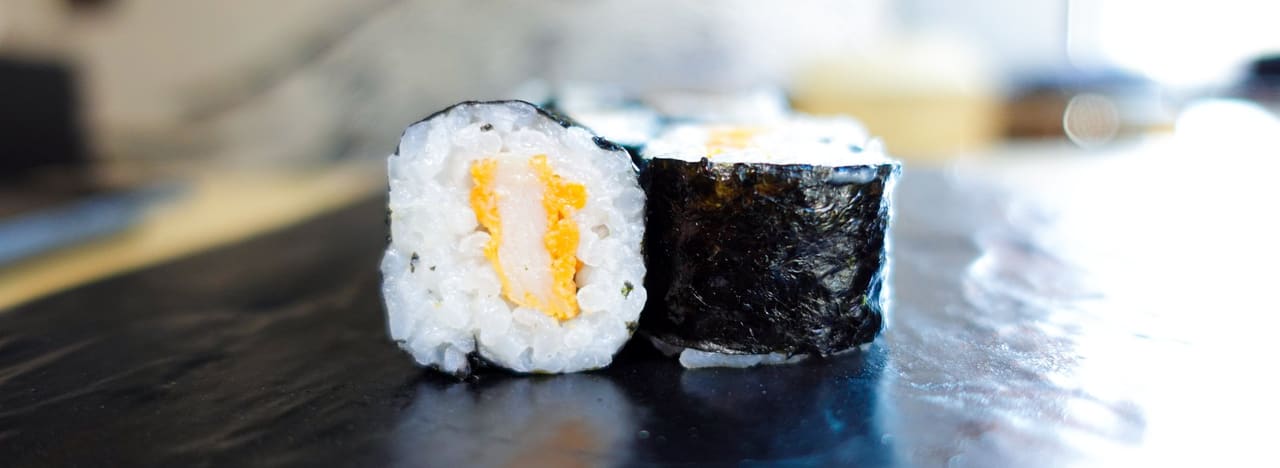
Maki indeed have specific names, notably according to their size. For a small hunger or for big appetites, pay attention to these codes if the restaurant you're in names its preparations according to their size. The hoso maki is a relatively small maki (2 to 3 cm in diameter). You'll then find the naka maki (3 to 4 cm) and the futo maki for the most imposing ones, going up to 6 cm in diameter.
The names also change according to the recipe and the ingredients slipped inside as the "filling". Here are a few examples:
- ebi maki (with prawn)
- sake maki (with salmon)
- tekka maki (with tuna)
- unagi maki (with eel)
- katakuchiiwashi maki (with anchovy)
- etc.
Now that you know the main variations and specificities of maki, all that's left is to enjoy them. Find a whole selection on our menu, and to your chopsticks!


