Every 5 May, a festive air floats over Japan, like the carp-shaped kites. It's Kodomo No Hi, the celebration of this emblematic fish, but also of children!
This day, declared a public holiday, is filled with festivities and ancestral symbols to discover below.
A festival that has greatly evolved
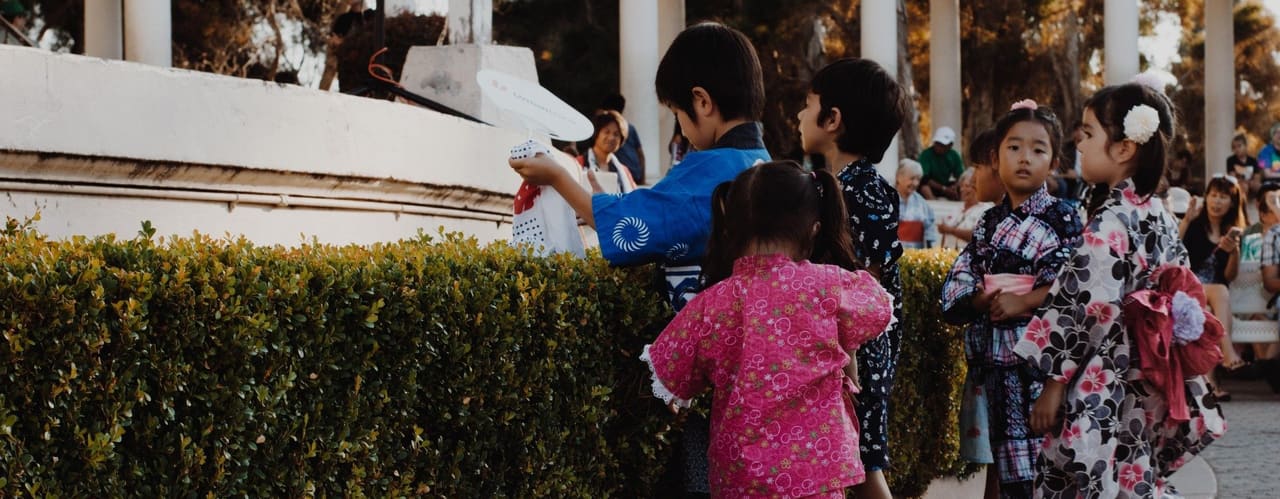
While today this day is the occasion to celebrate all children, that wasn't the case until the middle of the 20th century. The 5th of May has, in fact, been marked by celebrations for several centuries, and it all began on the other side of the East China Sea.
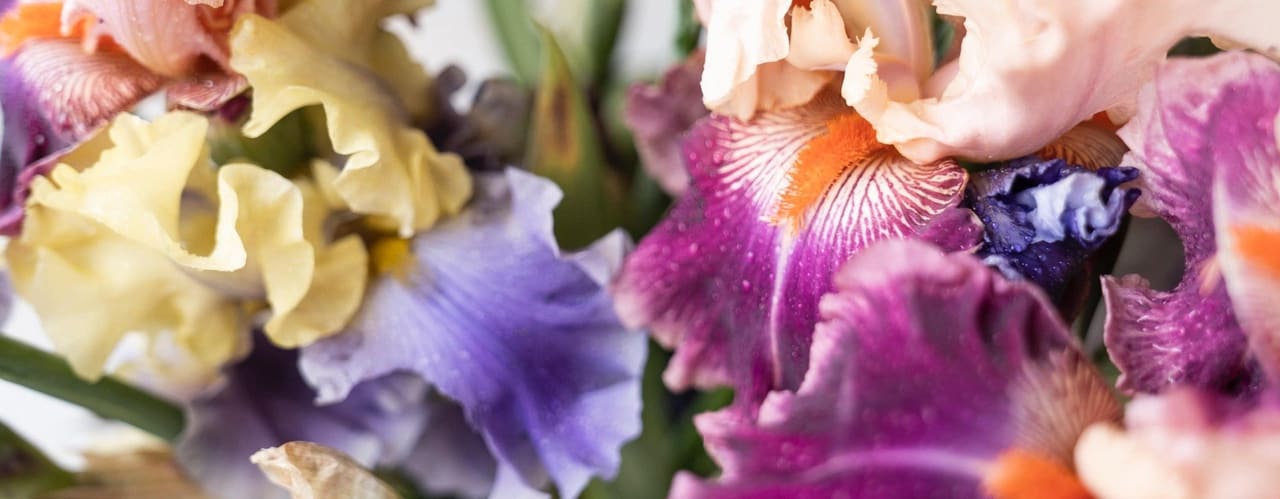
The Chinese lunar calendar indicating the 5th day of the 5th month as the start of summer, the new season — whose emblem was the iris — used to be celebrated in the country. This tradition was introduced to Japan during the Nara era (710-794) but somewhat readapted. At first, the Japanese devoted that day to a festival for another plant, the rush. This day was thus called Shōbu no sekku ("day of the fragrant rush"). The aim was notably to purify places and minds in order to avoid any kind of disaster during the hot season. Sprigs of iris and rush were thus hung, notably on the doors of houses, to protect them from intrusions and fires in particular. A habit that is still current, by the way.
The festivities were organised around activities aimed at proving the participants' valiant and heroic character. Archery contests, horse races, etc., considered too dangerous in the Edo era (1600-1868) and therefore banned. But still with this idea of celebrating "courage", the 5th of May turned into a day for little boys.
Then these celebrations fell into disuse, became less popular, until part of the population revived the festivities and adapted them. Less known for their sense of celebration than for their taste for battle, it was in fact the samurai families who appropriated this "little boys' day" to make it a sort of rite of passage. On 5 May, the young men belonging to the buke (samurai families) received elements to make up their future armour. A great symbolism in those circles.
Finally, in 1948 — the year of the public holidays law — it was decided that this day would no longer be solely dedicated to little boys, but to children in general. So no more warrior rites, but needless to say, in the collective consciousness young boys remain the most celebrated on this date.
And what about the carp in all this?
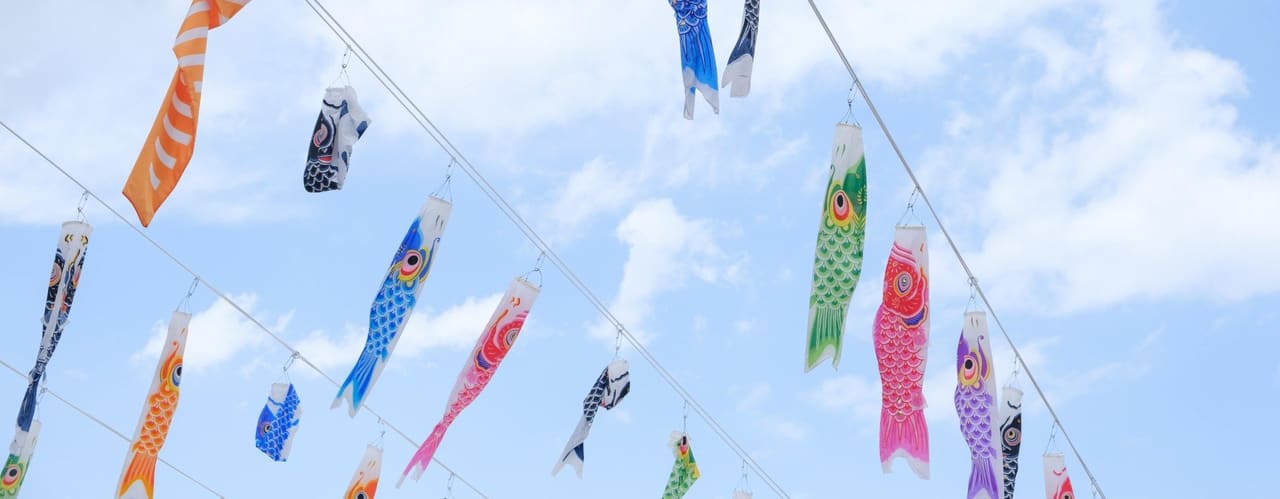
Indeed, Kodomo No Hi also presents itself as a day celebrating the emblematic fish of the archipelago: the carp. If the animal is associated with this 5 May day, it's because families, and notably children, are in the habit of hanging colourful carp-shaped windsocks in the air. So you'll be able to spot them in private gardens, but also in parks.
The carp has an important symbolism in Japan. It's attributed values such as courage, strength and perseverance, which Japanese parents thus wish to pass on to their children. And once again, more so to little boys on this day — little girls fortunately having a festival dedicated to them in early March (Hina matsuri).
The celebrations don't stop there during this day. After hanging flowers at the entrance of houses to protect them, as we've already mentioned, children are pampered and the focus of all attention. They notably take an iris bath. The leaves are placed in the water and allow the body to be protected against illnesses and against wicked spirits.
Most Japanese houses having decorative alcoves, it's there that children will display the "5th-month doll", gogatsu ningyō. This figurine, most often in terracotta, is used for prayers — these imploring for the safety and good growth of children, once again.
Finally, it's not uncommon to let your child drink a few sips of sake during the day. This rice alcohol being an integral part of most Japanese rites, it's time to initiate the youngest into it. It's also flavoured with iris and accompanied by pastries (kashiwa-mochi, chimaki, etc.).